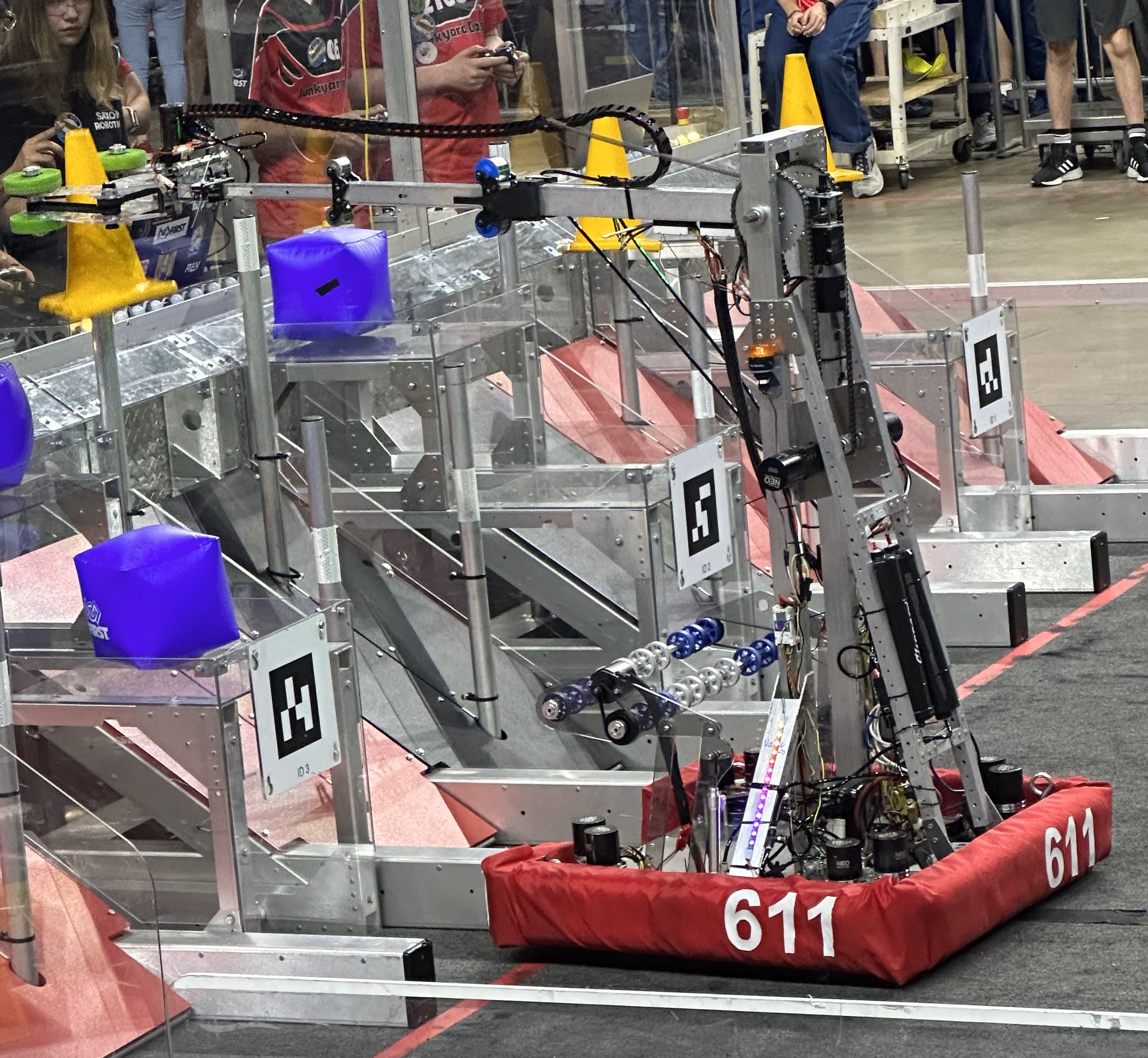
The Competition
FRC describes the competition as one where teams of high school students are challenged to build industrial-size robots under strict rules and limited time and resources, to play a difficult field game in alliance with other teams — while also fundraising, designing a team brand, and advancing respect and appreciation for STEM in the local community.
The 2023 challenge can be found here.
Our Robot
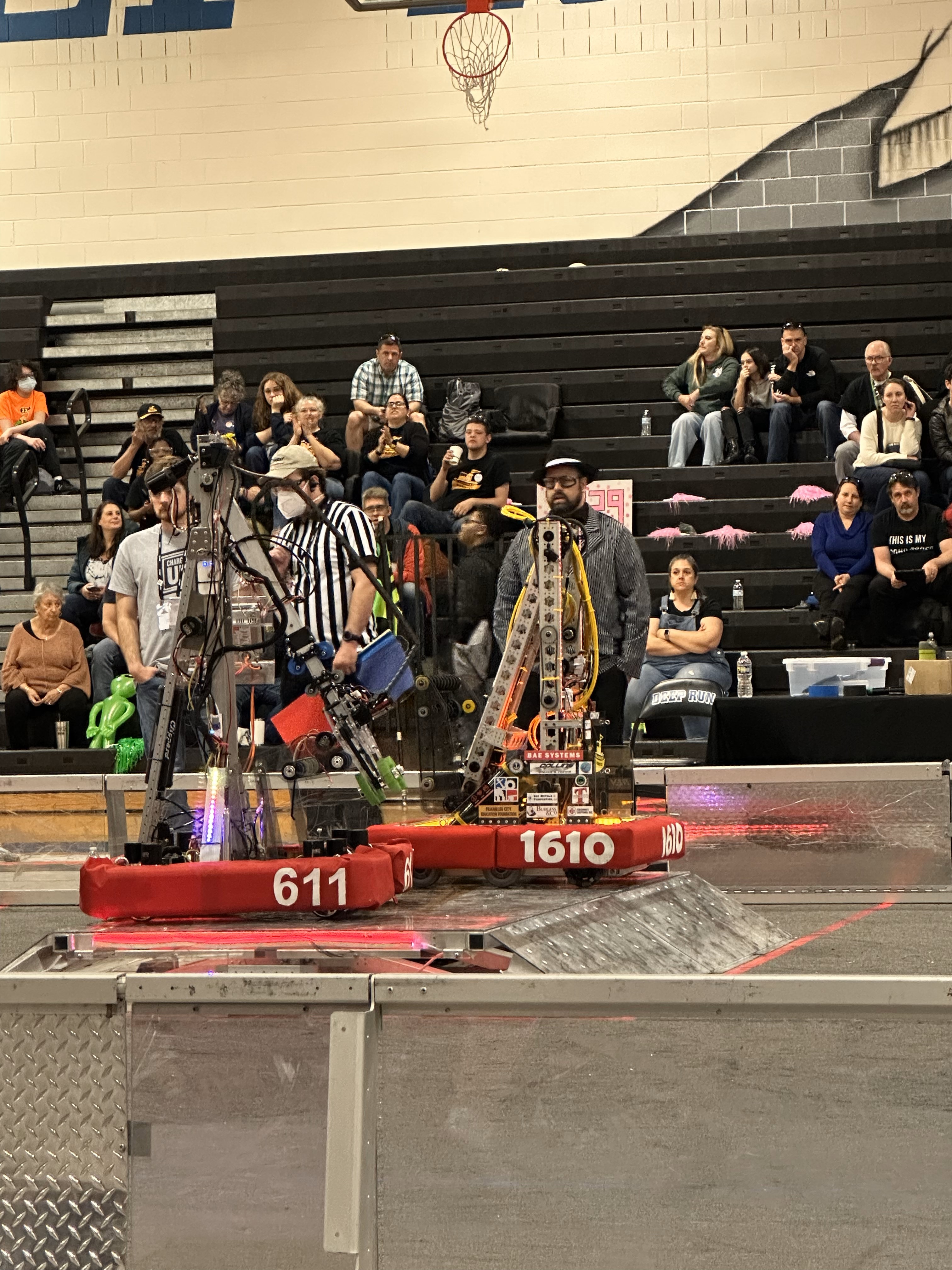
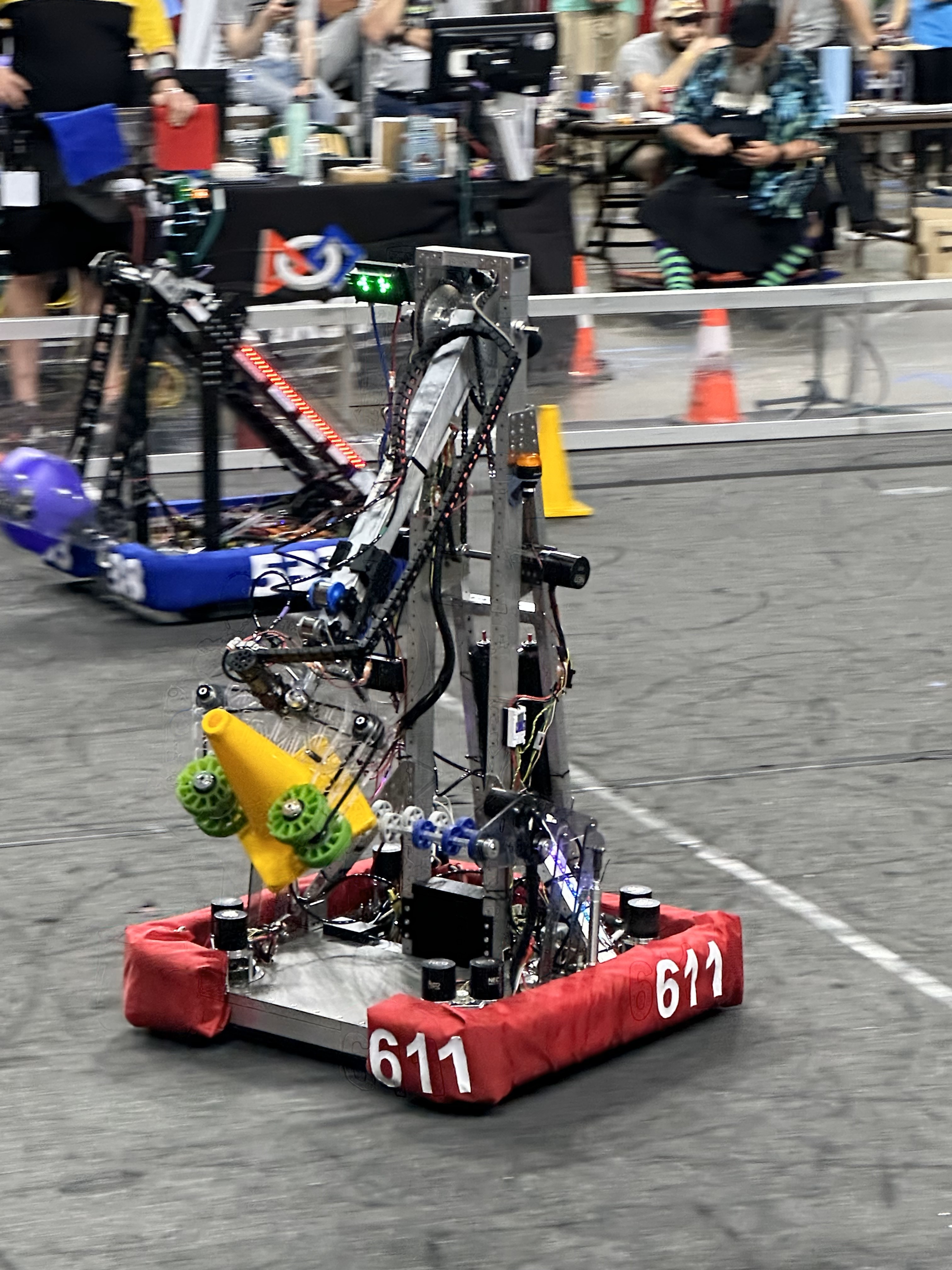
Our robot consists of four swerve drive modules on an aluminum chassis with a telescoping arm and claw for scoring, and an intake that drops down to pick up game pieces off the ground. A video of it in action can be found here.
The strengths of our robot were:
- The swerve drive allowed for fast, precise movement across the field.
- Our telescoping claw made scoring easy and reliable.
- Our intake allowed for fast piece pickup, "touch it, own it" style.
CAD
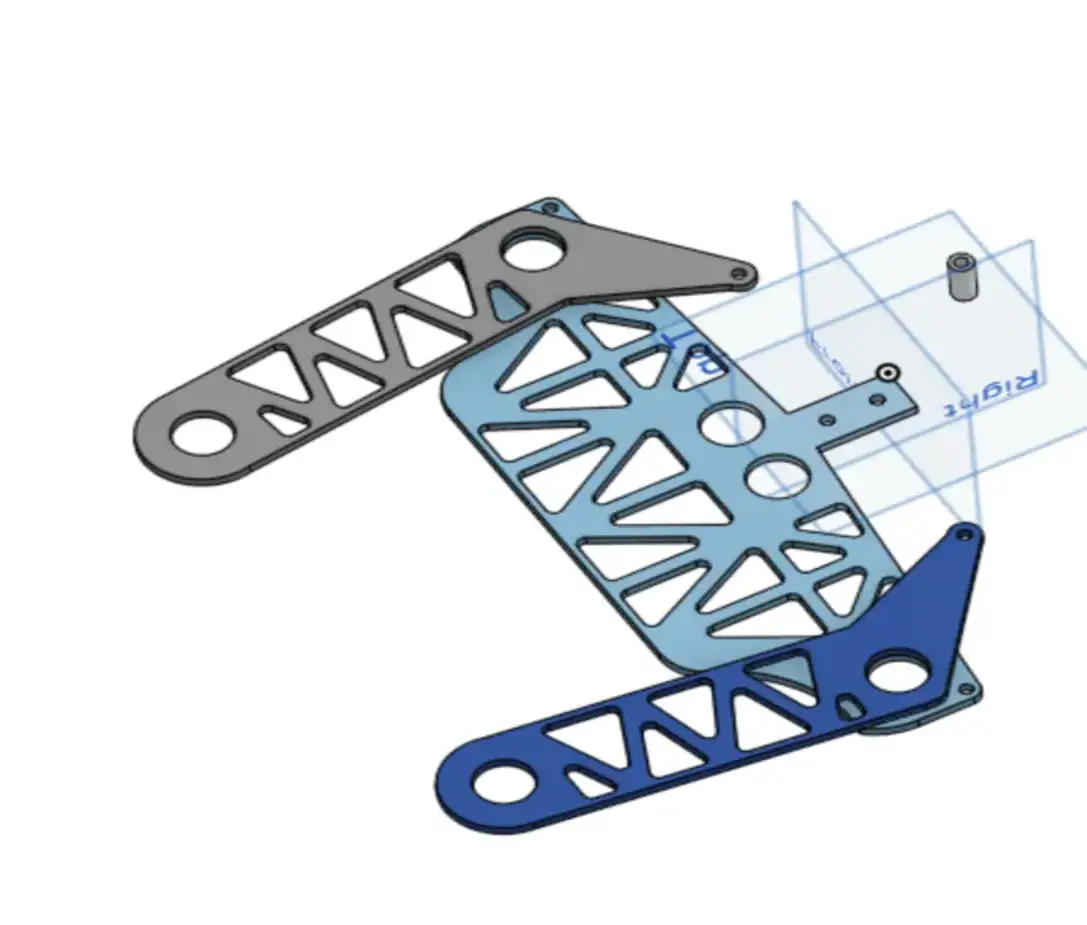
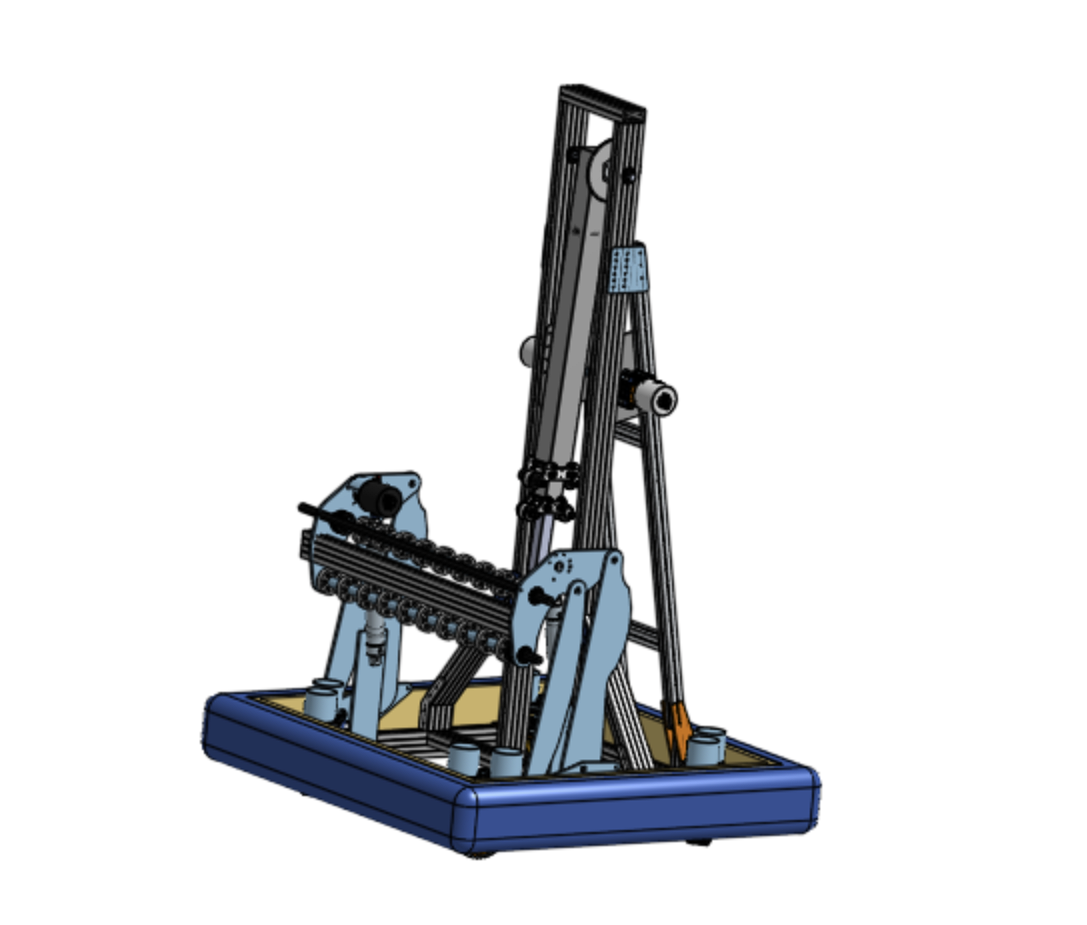
The claw shown is the top of our end effector, which was milled on a CNC out of polycarbonate. It has two compliant wheels driven by a brushed motor, plus a pneumatic piston that opens and closes the arms — letting the claw manipulate game pieces of varying sizes and shapes.
Manufacturing
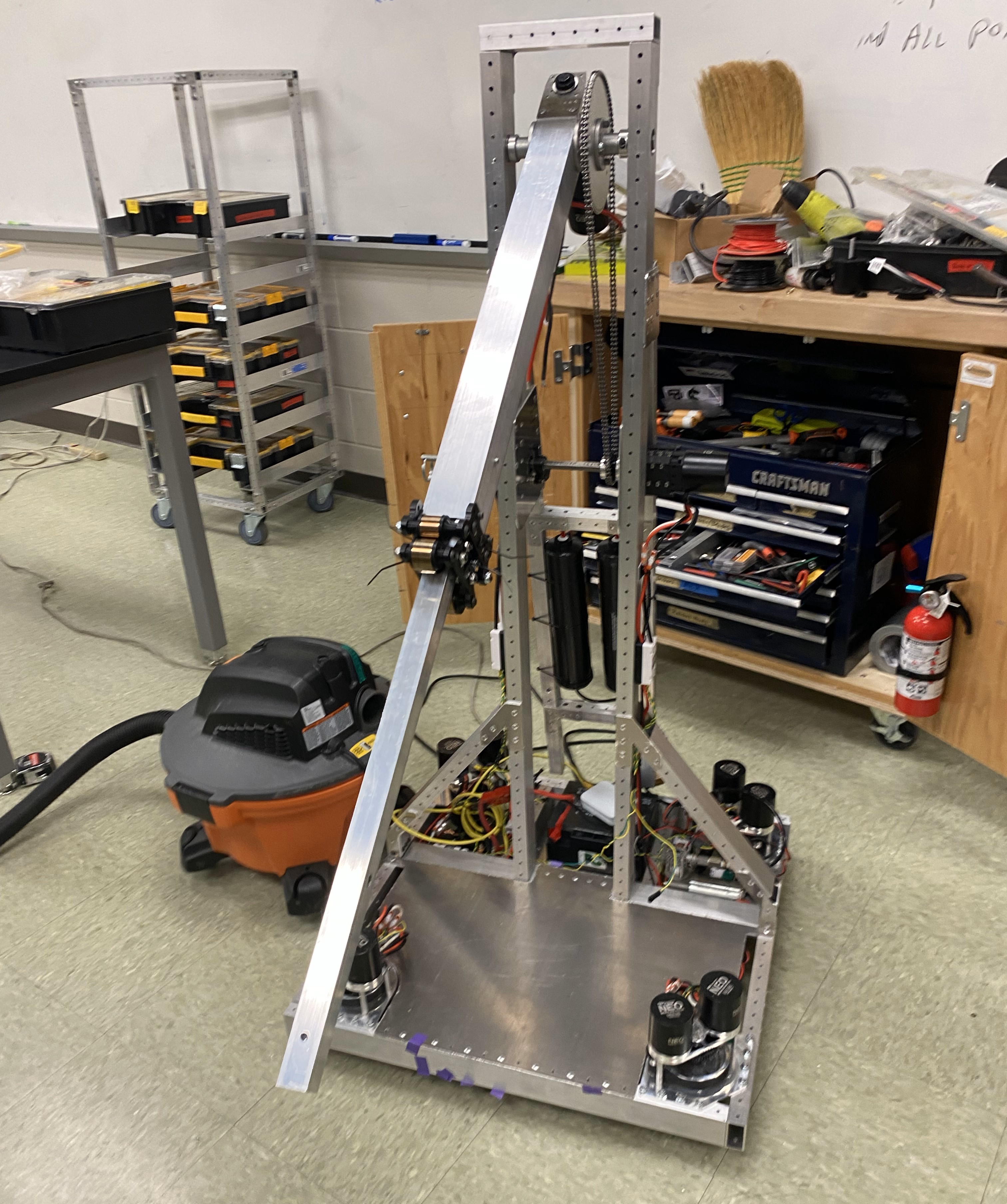
We divided construction into several groups — one focused on the drivetrain, another on the telescope and structure, and a third on the claw and intake. The drivetrain used a CNC aluminum-and-polycarbonate bellypan mounted to four SDS MK4 swerve modules. The telescope was purchased from The Thrifty Bot and modified for our needs. The intake and claw were designed in-house and machined from CNC polycarbonate.
Electrical
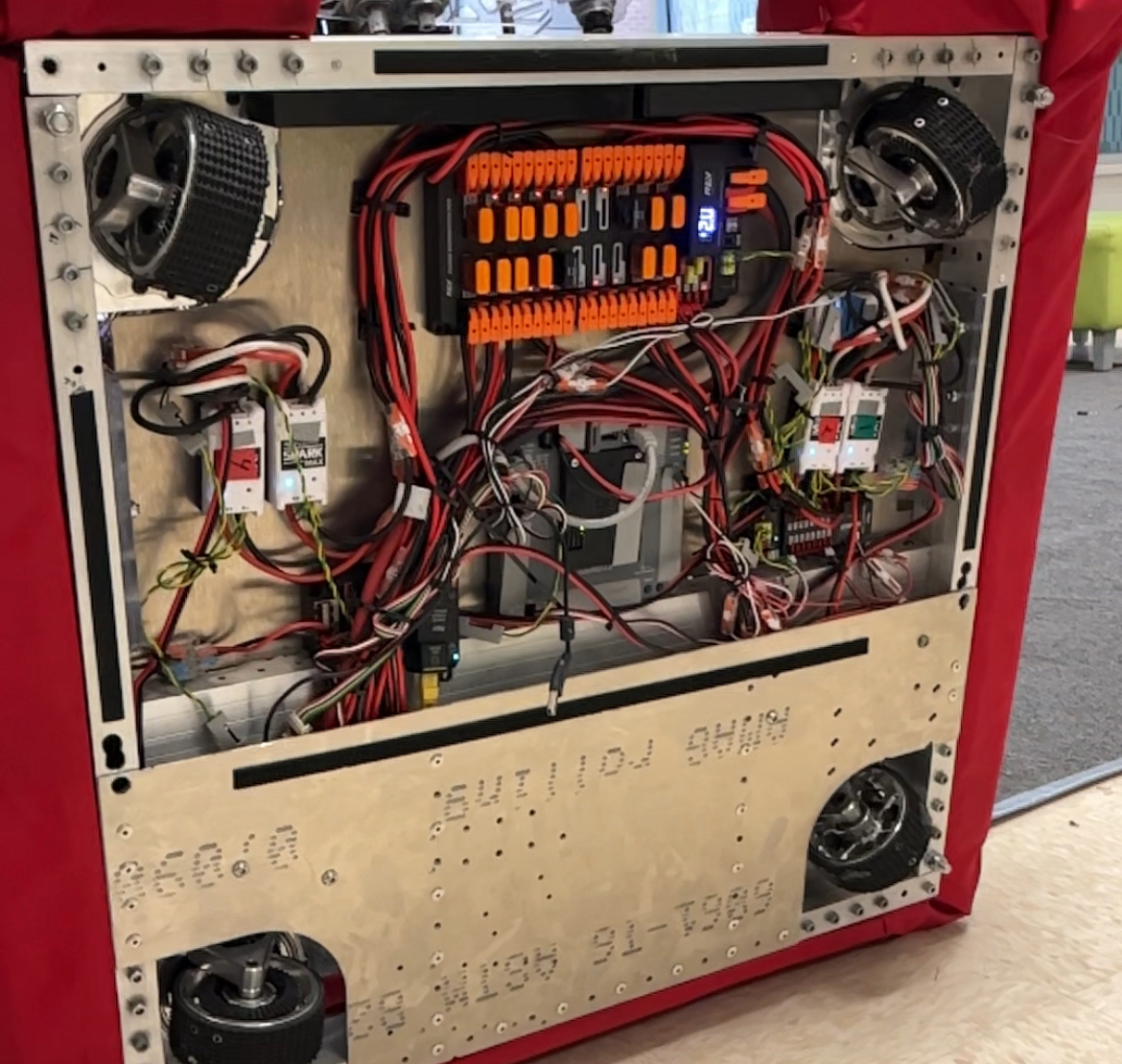
FRC robots use their own electrical system: a Power Distribution Hub (PDH, orange) distributes power to the SPARK MAXes that drive our NEO motors. Code and processing run on a RoboRIO — the gray rectangle located under the PDH — alongside a hub that controls our pneumatics and radio.
Reflection
This was my final year of high school, and my second year as president of the FRC team. My first year, junior year, saw a lot of institutional knowledge lost to COVID, which made it more of a rebuilding year for our team. This year I was able to apply everything I'd learned junior year — from robot design and construction to team and finance management. I believe it paid off: we won the 2023 Glen Allen regional event.